
Robotics for Smart Factories: Why It Matters and How Useful It Is
The world is still far from the robot revolution and everything that science fiction writers and philosophers described. However, robotic technologies have come a long way since 2006, when the humanoid Honda robot (HMC), ASIMO, awkwardly fell down the stairs.
People trust robots more with each passing day: automated machines, kitchens and even laboratories were not created for nothing. Although Honda shelved ASIMO long ago, the commercial development of non-humanoid robotics is still active. The difference between new robots and those of the last century lies in functionality.
Thanks to artificial intelligence, robots today depend less on constant control and task updates. Manufacturers can change their robots when demand shifts or new products appear on the market, without losing huge investments.
The Future of the Workforce
In its research, Deloitte and the Manufacturing Institute came up with unusual new job titles that will become jobs for people as robot use in manufacturing grows. For example, titles such as "Smart Factory Manager" and "Smart Scheduler" may appear. People will be able to work alongside robots or control them remotely using digital tools.

According to Global Workplace Analytics, 75 million employees, or 56% of the US workforce, could work remotely in the near future. As more people in the manufacturing sector are replaced by artificial intelligence and robotics technologies, remote workers will be more likely to stand by a conveyor with a robot at least occasionally than to stare at a computer all day. Especially if such workers hold positions with the word "smart" in them.
In the US and Europe, employers already see a mismatch between candidates' education levels and what companies need. In all sectors, demand will grow for higher social, emotional and technological skills compared with the previously prevailing physical ones.
The Smart Factory
The whole world dreams of factories that work flawlessly, without failures and without generating waste. Thanks to robotics, data will be processed at lightning speed and transmitted across hundreds of production lines equipped with robots. No more downtime caused by arguments between a foreman and a fitter about who should win the Champions League Cup. Production efficiency will be maximized with the help of intelligent analytics.

The advantages of a fully automated factory are staggering. Deloitte previously reported that one electronics company developed a smart factory with fully automated production systems. This led to shorter order lead times, lower costs, increased production capacity and a 50% reduction in defective products.
According to Mordor Intelligence, the market value of smart factories is estimated at $270.8 billion. However, such factories do not appear out of thin air. Roboticists, scientists, engineers and many other people work around the clock to make automation a reality for all of us.
Let's look at five companies that are creating the future of robotics for smart factories.
Adaptive Robotic Manufacturing
Flexiv
Founded in 2016, the company develops and manufactures adaptive robots for general industrial purposes. The company's first product, Rizon, can adapt to changes, in particular to small position errors caused by vibrations that usually occur during production and human intervention.
The device promises to automate complex tasks through hand-eye coordination. The key is precise force sensing, which allows the robot arm to react quickly to tiny changes, and artificial intelligence capabilities for adjusting position. Rizon is used for polishing curved surfaces, connecting wires and assembling components.

Symbio Robotics
The company develops artificial intelligence-based software for controlling industrial robots. The SymbioDCS technology ensures that robots perform their work correctly.
The middleware platform lets robotics developers program their robots in modern programming languages: Java, Python and Ruby. As a result, companies will be able to hire the same programmer to build their website and run their robots.

Inspection Robotics
Elementary Robotics
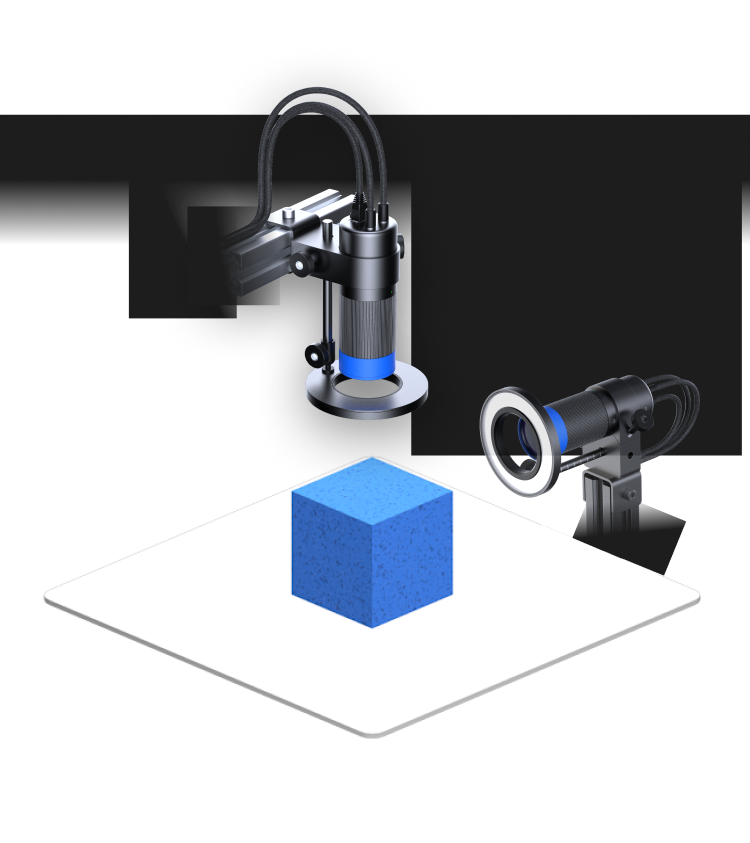
The company specializes in creating robots with cutting-edge visual artificial intelligence to improve production quality and tracking.
In essence, the robot helps companies detect more defects. Elementary Robotics promises that visual inspection robots can be deployed in less than 30 minutes.
Pre-Programmed Robotics
Rapid Robotics
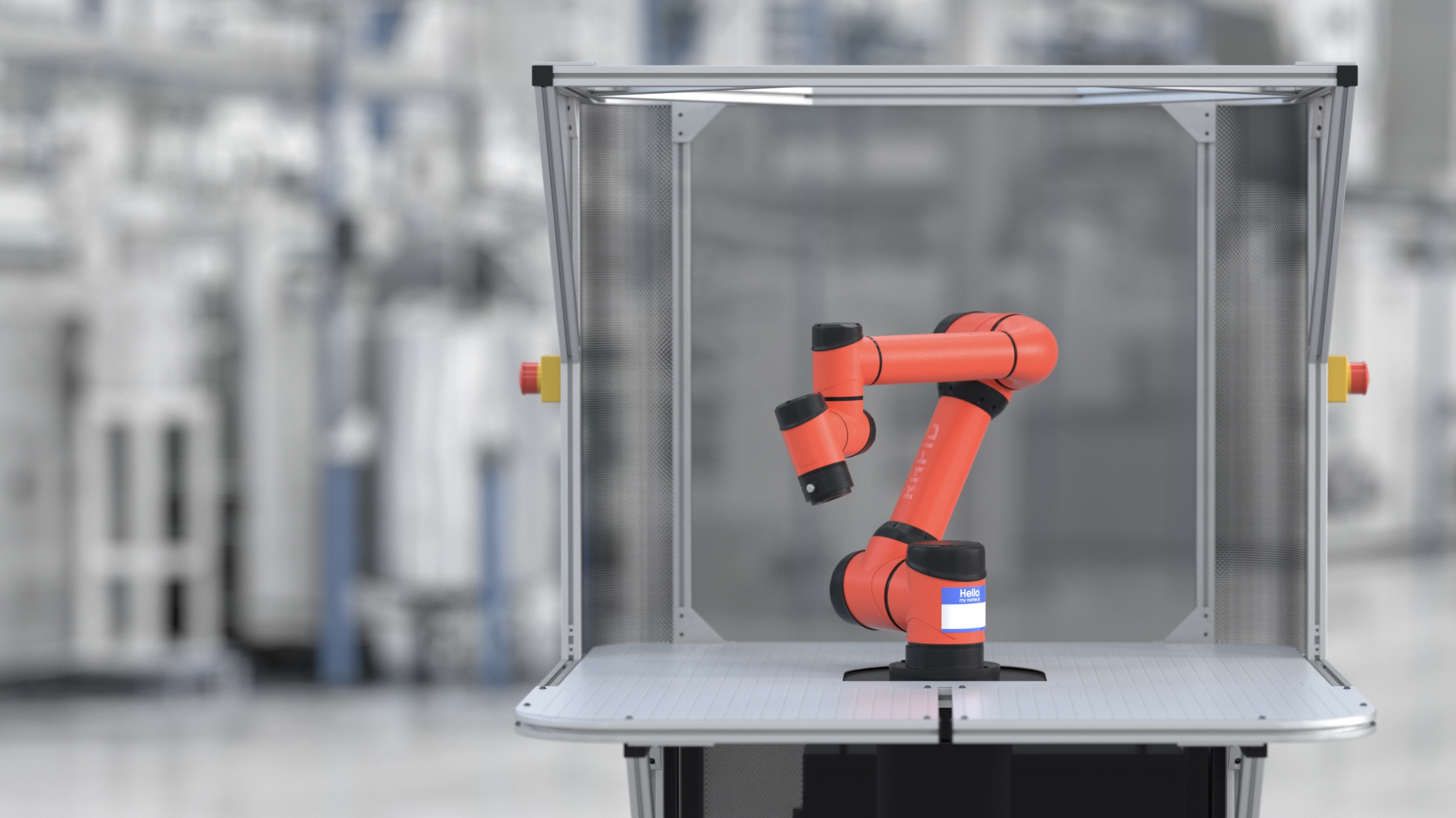
The company builds pre-trained robots for performing dozens of simple machine tasks. Such robots need no additional training or programming. They are ready to work right away.
As a result, one employee can set up several robots in a production shop to perform far more tasks than a single machine and its operator. Rapid Robotics even claims its robots become smarter through use.
Assembly Robotics
RIOS
Since 2018, the company has been attracting investment to create robots based on artificial intelligence with human-level dexterity. The company's first product, DX-1, is a robot designed to perform most conveyor belt operations.
The robot combines artificial intelligence capabilities, an AI-driven eye, and hands that sense touch. The software platform includes a realistic simulation package, which allows the robot to learn and, over time, interact with new things. DX-1 is suitable for manufacturing, laboratory automation, e-commerce and even food service.


