
Robot Artist Ai-Da Held in Egypt for 10 Days Over Suspected Spy Plot
She was described as a “vision of the future” that is no worse than other contemporary abstract artists. However, Ai-Da is the world's first ultra-realistic robot artist, and she ran into a temporary obstacle before her recent exhibition, when Egypt's security forces detained the device at customs.
Ai-Da was due to open and present her works against the backdrop of the Pyramids of Giza. This was the first time contemporary art was to be shown next to a pyramid. However, due to “security concerns,” including fears that she was part of a wider spy plot, Ai-Da and her sculpture were held at Egyptian customs for 10 days before being released. The case could have ended in a diplomatic scandal.
Shortly before his robot's release, its creator Aidan Meller said: “The British ambassador worked all night to free Ai-Da, but now we are very close to resolving this. It is really stressful.” According to him, border guards first detained the robot artist because she had a modem, and then because cameras were found in her eyes, which she uses for drawing and painting: “I can give up the modems, but I can't gouge out her eyes.”
Finally, a few hours before the exhibition “Eternity is Now” she passed customs inspection. The British Embassy in Cairo said it was “pleased” that the case had been resolved. Ai-Da and her sculpture were flown to Cairo before the exhibition, which will run until November 7. The event was organized by the consulting firm Art D’Égypte in partnership with Egypt's Ministry of Antiquities and Tourism and the Ministry of Foreign Affairs. The exhibition will feature works by leading Egyptian and foreign artists, including Stephen Cox, Lorenzo Quinn, Moataz Nasr and Alexander Ponomarev.
Ai-Da's sculpture, measuring 2 x 2.5 m, represents the riddle of the Sphinx: “What walks on four legs in the morning, two legs at noon and three legs in the evening?” The answer is a human.
“Four legs are a baby, two legs are an adult, and three are an elderly person who needs a cane. So Ai-Da created a giant version of herself with three legs. We say that, thanks to the new Crispr technology and the way we can perform gene editing today, extending life is actually very likely. Ancient Egyptians did the same with mummification. People have not changed: we still have the desire to live forever. But all of this will come to nothing if we cannot free Ai-Da”

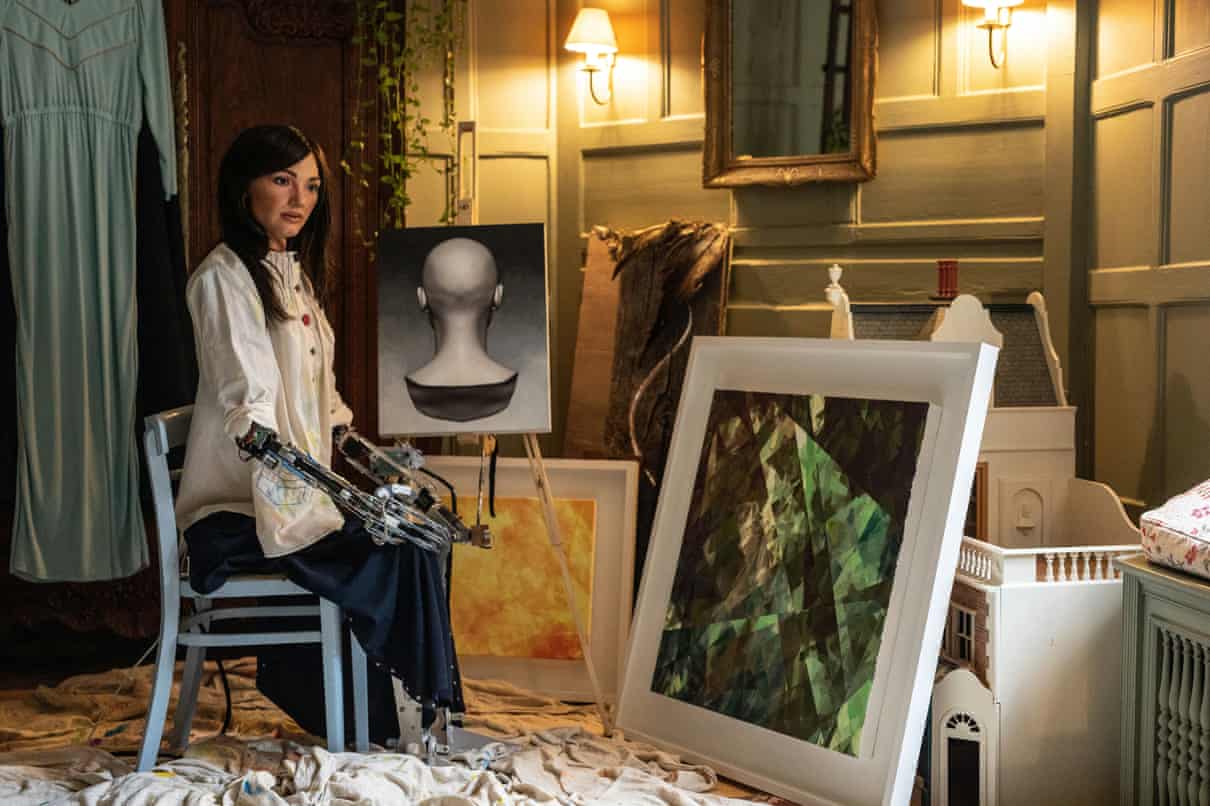
Named after computing pioneer Ada Lovelace, the robot was created by a team of programmers, roboticists, art historians and psychologists. This multimillion-dollar project was completed in 2019 and is updated as artificial intelligence technology improves. The device's works, including “the first self-portrait,” have been exhibited at the Design Museum and the Victoria and Albert Museum.
Oxford gallerist Meller has always hoped that his project would spark debate about the rapid growth of artificial intelligence: “She is a robot artist, let's be clear about that. She is not a spy. People are afraid of robots, I understand that. But the whole situation is ironic, because Ai-Da's purpose was to identify and warn about the misuse of technological development, and she is being held because she is technology. I think Ai-Da would appreciate that irony.”
“We know well that the fictions of “1984” (George Orwell's dystopian novel) and “Brave New World” (Aldous Huxley's dystopian novel) have become facts. Artificial intelligence is developing rapidly. For the first time, tens of thousands of graduates will earn degrees in machine learning. A supercomputer can use huge volumes of data and process unusual algorithms. We predict that by 2025 technology will go through major upheavals, and Ai-Da is trying to use art to draw attention to this”

The website about the robot artist says: “Ai-Da is the world's first ultra-realistic artist. She draws using cameras in her eyes, her artificial intelligence algorithms and a robotic arm. Created in February 2019, she held her first solo exhibition, “Unprotected Future,” at Oxford University, where her art encouraged viewers to think about our rapidly changing world. Since then she has travelled and exhibited her works around the world, and in 2021 she held her first exhibition in a major museum, the Design Museum. She continues to create art that challenges our notions of creativity in the posthumanist era.”
It must be understood that the role and definition of art change over time. Ai-Da's works are art because they reflect the enormous integration of technology into today's society. It is worth noting that “art” means different things to different people. Nowadays the prevailing view is that art is created by humans for other humans. It was not always so.
For example, the ancient Greeks believed that art and creativity came from the gods. Inspiration was considered something divine. Today humanist thinking prevails, where art is entirely a human affair, arising from human will. However, modern thinking suggests that we are moving away from humanism at a time when machines and algorithms influence our behavior to such an extent that our “agency” is ceasing to be only ours. It is beginning to be outsourced to algorithmic decisions and suggestions, and full human autonomy is becoming less reliable.
Ai-Da creates art because art should no longer be limited to requiring only human intervention.


