
Researchers Build Tiny Robots That Swim Using Ultrasound
Researchers at ETH Zurich have developed a tiny robot that mimics the movement of a starfish larva. It is driven by sound waves and is equipped with tiny hair-like structures that direct the fluid around it, just as its natural model does. In the future, such microswimmers could deliver drugs to diseased cells with very high precision.
Microrobots have long attracted many researchers. Such technologies could ultimately offer a wide range of applications, including several useful functions in healthcare. Targeted drug delivery and microsurgical procedures are often mentioned.
Mobility is one of the biggest questions raised by such technologies. In particular, how roboticists can make tiny devices move without batteries and other technologies on board. Magnets are a fairly common proposal, but the ETH Zurich team is exploring a completely different solution: ultrasound.
Robots smaller than a human hair were created using photolithography. They are covered with synthetic versions of cilia, the hair-like structures covering starfish larvae. In the biological example, these ultrathin hair-like structures stir the surrounding water in patterns that create small vortices, propelling the starfish larvae through the fluid. In effect, the system either pushes water away or pulls it in.
«At first glance, the microrobots bear little resemblance to a starfish larva. At the larval stage, a starfish has a lobed body only a few millimeters across. The microrobot, meanwhile, is a rectangle ten times smaller, only a quarter of a millimeter across. But they have one important feature: a row of thin movable hairs on the surface, called cilia,
These cilia were the key element in the design of the new microrobot, developed by ETH researchers led by Daniel Ahmed, professor of acoustic robotics for life sciences and healthcare. «At first, we simply wanted to test whether we could create vortices similar to those of starfish larvae, with rows of cilia tilted toward each other or in different directions,
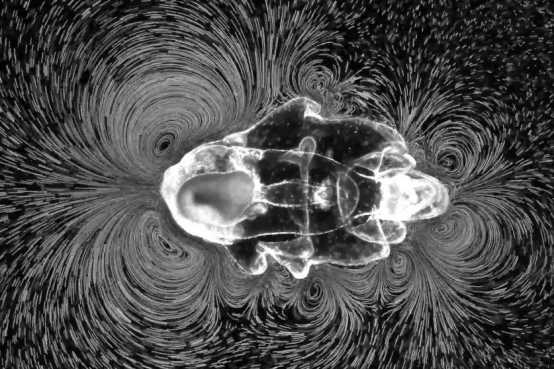
«A starfish larva is covered with hundreds of thousands of these hairs. Arranged in rows, they move back and forth in coordination, creating whirlpools in the surrounding water. The relative orientation of the two rows determines the outcome: tilting the two beating strips toward each other creates a vortex with a pushing effect that propels the larva forward. Conversely, angling the two strips away from each other creates a vortex that draws in fluid and captures the particles the larva feeds on», ETH Zurich noted.
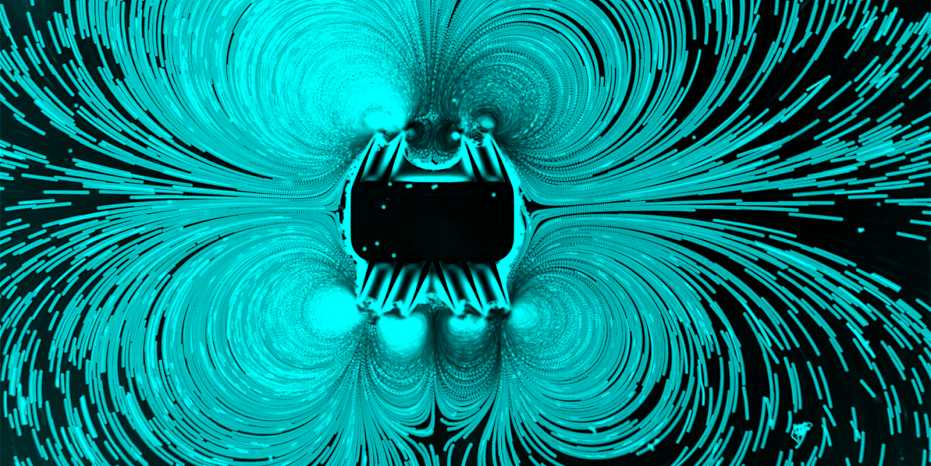
The team says it was able to create similar propulsion in its tiny robots by applying ultrasound waves, allowing them to swim in a straight line. The objects visible around the robot in photos and videos provided by the scientists are plastic microbeads added to the water to show how it moves around the robot.
In their lab, the researchers showed that the microrobots can swim in a straight line through liquids such as water. Adding tiny plastic beads to the water made the vortices visible. The result is striking: starfish larvae and the devices create an almost identical flow pattern.
The researchers then arranged the cilia strips so that the suction vortex sits next to the pushing vortex, mimicking the feeding technique used by the starfish larva. This arrangement allowed the robots to collect particles and send them in a chosen direction.
Ahmed is confident that this new type of microrobot will be ready for medical use in the foreseeable future. This is because a system based solely on ultrasound has decisive advantages: ultrasound waves are already widely used for imaging, penetrate deep into the body, and pose no health hazard.
“Our vision is to use ultrasound for movement, imaging and drug delivery”
The fact that this therapy requires only an ultrasound device makes it inexpensive and therefore suitable for use in both developed and developing countries.
Drug delivery is the most widely discussed application in this case, in particular the ability to deliver medication directly to a specific site such as a stomach tumor. This could enable more effective use of the drug and reduce potential side effects. Conventional drugs spreading by diffusion is inefficient.
«But before this vision can be realized, a serious challenge still has to be overcome: imaging. To guide tiny machines to the right place, a clear image must be generated in real time. The researchers plan to make the microrobots more visible by adding contrast agents, like those already used in ultrasound medical imaging», the researchers said.
In addition to medical applications, Ahmed expects that this starfish-inspired design will be important for manipulating minimal volumes of fluid in research and industry. Cilia beating strips can perform tasks such as mixing, pumping and capturing particles.


