
Alphabet X Is Developing Exosuits That Anticipate User Movements
In the robotics industry and beyond, there is still an obvious problem: a huge gender gap. This is something we all try to keep in mind and fix by any means, but the numbers remain staggering. According to statistics, about 9% of robotics engineers are women. This is very, very bad.
Engineer Kathryn Zealand published an article on LinkedIn about the gender gap in this industry: "We have huge opportunities! Women and other underrepresented groups of talented people who, although they do not consider themselves "roboticists", can become vital members of a robotics team that will change the world."
It is worth noting that Zealand is the head of the Alphabet X project. Exosuits/exoskeletons are a rapidly developing category of robotics that truly spans the whole spectrum (from Sarcos's giant James Cameron-style suit to much more subtle fabric-based systems). Key players in this market include Ekso Bionics, ReWalk and SuitX.

Even Samsung has demonstrated its solution as part of its robotics division, but for now it seems more decorative than practical. Most of these systems aim to solve one of two problems:
- Helping employees perform complex or repetitive tasks.
- Assisting people with limited mobility.
Many companies offer both. The Harvard Biodesign Lab said: "Compared with traditional exoskeletons, these systems have several advantages: the user's joints are not constrained by external rigid structures, and the wearable part of the suit is extremely light. These properties minimize unintended interference of the suit with the body's natural biomechanics and enable a more synergistic interaction with the user."
Alphabet likes to occasionally give the world a glimpse behind the scenes of some of its X projects. This is how the Smarty Pants project became known for the first time, inspired by the mobility problems of Zealand's 92-year-old grandmother. A very early controllable prototype built around a Raspberry Pi was created by a team of suit designers and deep learning specialists.
The system uses sensors to try to efficiently predict movement, anticipating where force is needed for tasks such as climbing stairs. However, fewer than half of X's research projects become products. The team likely wants to stand out from other exosuit projects by using Google's knowledge base in deep learning and artificial intelligence to build these predictive algorithms.
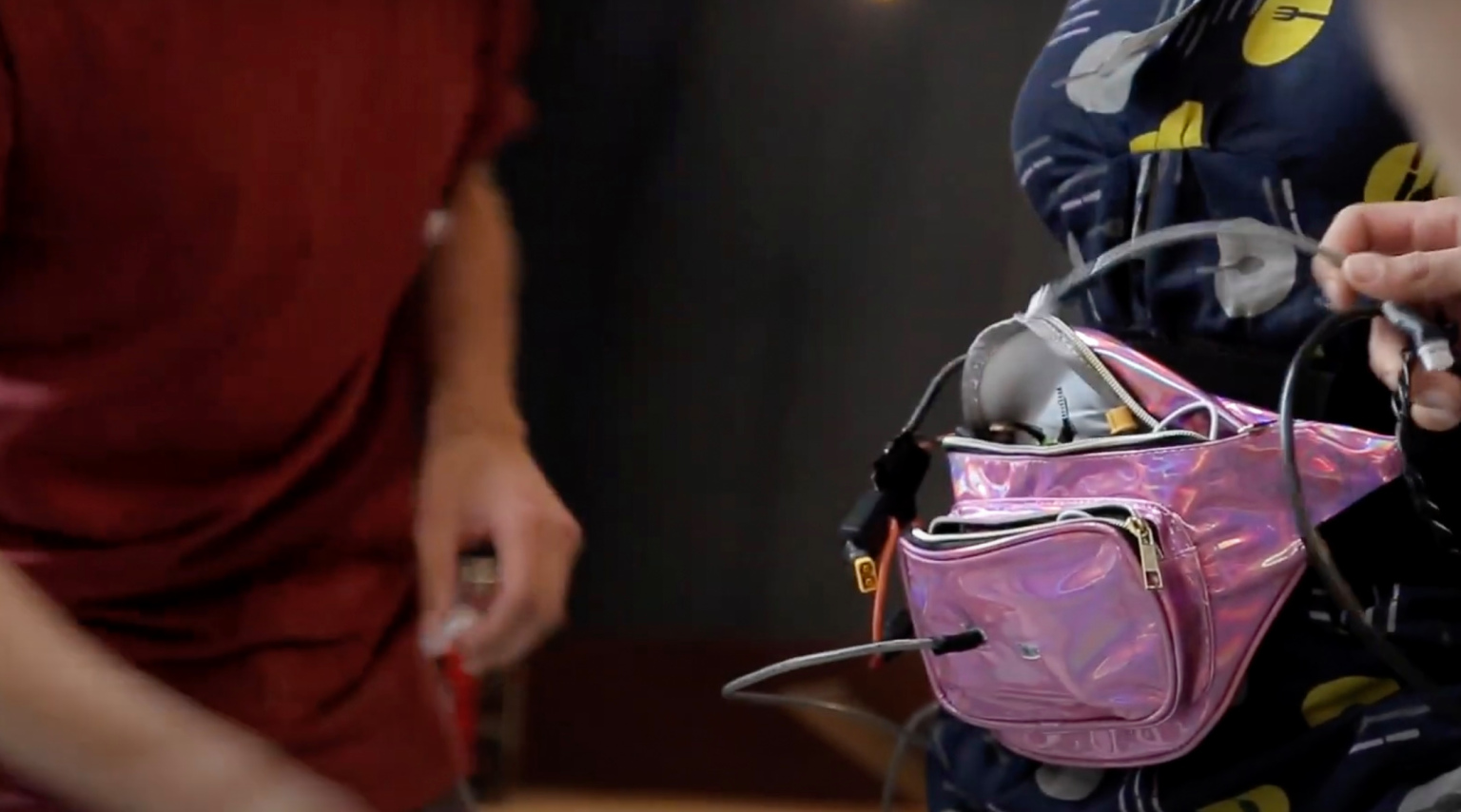
Alphabet declined to provide additional information about the project, noting that it likes to give its teams "time to learn and iterate out of sight". In October 2020, we saw part of a new look at Smarty Pants in a video about Design Kitchen, the Alphabet X lab/design studio. The video showed a waist pack holding a Raspberry Pi system and additional components.
Such a pack turned out to be a very smart solution to the problem of routing wires for an early-stage wearable prototype.
“One thing that really helped the team was focusing on the problem. Even if you have spent months on something, if it does not actually lead to achieving that goal, sometimes you give credit to the work done and say: "We learned a lot in the process, but this is not what can actually solve the problem”
Another piece of information we have so far is last year's patent application, which emphasizes efforts to anticipate movement. The device effectively uses sensors and machine learning to adjust the tension of clothing areas designed to assist the user.
The proposed methods and systems provide adaptive support and assistance to users by performing intelligent dynamic adjustment of tension and stiffness in specific fabric areas or by applying forces to non-stretch garment elements, which are comfortable enough to be suitable for everyday use.
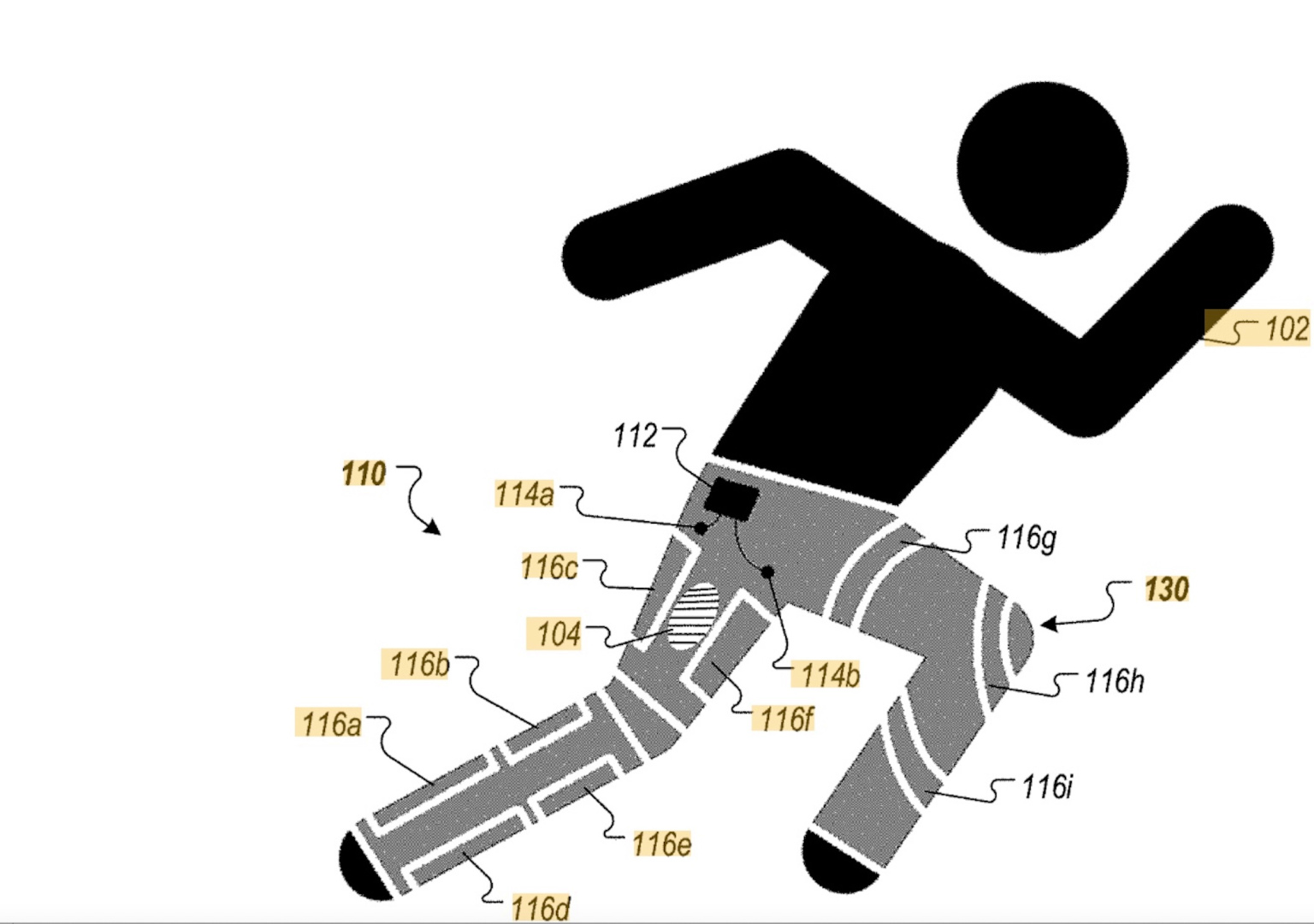
Among the ways of assistance: detecting the movement of a specific part of the user's body enclosed in clothing, determining the activity classification for that movement, determining a garment support configuration adapted to the activity classification, and dynamically adjusting tension and/or stiffness to provide individualized support and assistance to the user and the activity they are performing.
It is nice to see that Alphabet is taking a more organic approach to developing robotics startups in-house, rather than acquisitions and consolidations as it did a few years ago. Even Boston Dynamics briefly lived under the Google umbrella. Now we just have to wait for the company to officially unveil its exosuit that predicts your movements.


