
Waymo launches test robotaxi service in San Francisco
The company Waymo, which develops autonomous driving technology and is part of Alphabet (the parent company of Google), has launched a limited robotaxi service in San Francisco that is open to selected passengers.
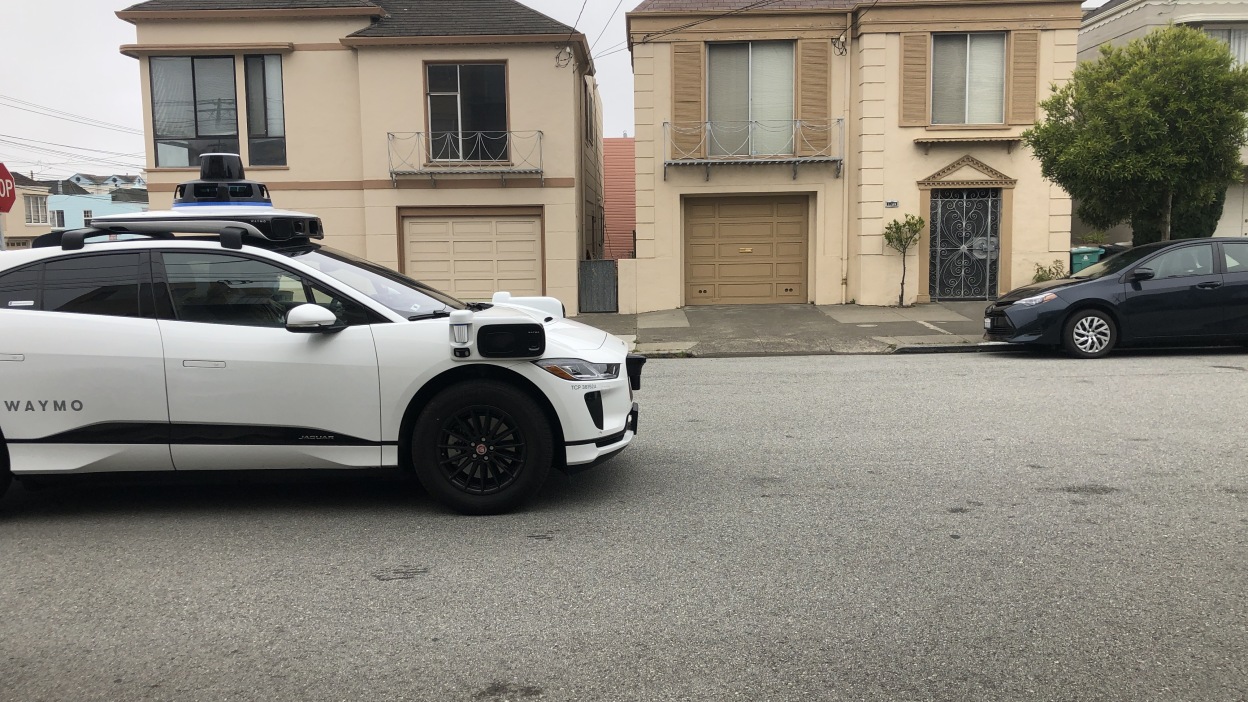
Waymo One Trusted Tester is a research-focused program that lets San Francisco residents take autonomous rides in a fully electric Jaguar I-PACE. Although the program has only just started in San Francisco, it already resembles the company's program in Phoenix.
In 2017, Waymo began offering autonomous rides in Phoenix to select passengers through its Early Rider Program. At the end of 2020, the city already launched a public robotaxi service.
The company said that the Trusted Tester program is open to all interested San Francisco residents. It is unknown how many passengers will be included in this test group or how many Jaguars will be provided for them. Passengers must sign a non-disclosure agreement that prevents them from publicly sharing details of their experience.
The vehicles are equipped with Waymo's fifth-level autonomous driving system. Currently, rides are free and will be available 24 hours a day, seven days a week. The initial service area includes several neighborhoods of the city, including Sunset, Richmond, Pak Hights, Noe, Castro, Haight Ashbury and others. Over time, the service area will expand.
All rides during this program will be accompanied by a safety driver. San Francisco is also home to Cruise, an autonomous vehicle manufacturer owned by GM. Cruise has been testing in the city for years, often stating that the city's challenging driving conditions give it an advantage over competitors.
According to the annual report of the California Department of Motor Vehicles, Waymo and Cruise are leaders in the industry. The report records the number of times a human driver had to take control of the autonomous driving system being tested on the state's public roads between December 2019 and November 2020.
In February 2021, Waymo launched limited testing in San Francisco, using its own employees as passengers. In July 2021, the company opened an office in Pittsburgh, joining a group of competitors. Waymo then said it did not plan to launch a robotaxi service in Pittsburgh, but that the "new team will work on developing motion planning, real-time route planning and development of Waymo Driver autonomous vehicle technology."
Waymo has raised $5.5 billion in funding. A reporter from the San Francisco Chronicle is reportedly the first journalist in San Francisco to ride in one of the robotaxis. She documented a 15-minute ride and said: "At no point during the ride did I feel unsafe."
The journalist noted: "Thanks to reliable safety protocols, including special coronavirus cleaning tools such as Air Flush that clean the car's interior, I was confident that Waymo could safely take me from point A to point B. And with the sky-high prices of Uber and Lyft in San Francisco and beyond, this is an excellent alternative for short trips."
Waymo Driver is autonomous driving technology built on unmatched experience and designed with safety requirements in mind. Waymo Driver will never be drunk, tired or distracted. The company says it has tested the technology in more than 10 US states, driven millions of kilometers on public roads and billions of kilometers in simulation.
Waymo's goal is to make it easy and safe for people to get wherever they need to go. Waymo Driver technology applies to any vehicle, from minivans and SUVs to Class 8 trucks.
Before Waymo Driver begins operating in a new area, company staff map the territory with incredible detail, from lane markings to stop signs, curbs and crosswalks. The technology uses not only GPS (which can lose signal), but also these highly detailed custom maps, matched against real-time sensor data to determine its exact position on the road at any time.
The Waymo Driver perception system takes complex data collected by an advanced set of sensors and interprets what is around the vehicle using technologies such as machine learning, from pedestrians to cyclists, from vehicles to construction sites. The technology also responds to signs and signals, including traffic light colors.
Waymo Driver uses information it collects in real time, along with experience gained over kilometers of real driving and simulation, to anticipate what other road users might do. The technology understands that a car moves differently than a cyclist, pedestrian or other object, and then predicts the many possible paths other road users might take. And all of this happens in the blink of an eye.


