
Gitamini is a new robotic backpack that follows its owner everywhere
Back in 2019, Boston-based company Piaggio Fast Forward released the first version of an automated cargo device for pedestrians called Gita. Two years later, after many design improvements, PFF plans to release a smaller and more agile version in October 2021, which it called Gitamini.
People's lifestyles, work and mobility have changed over the past year, and these changes are likely to last. We are seeing technical changes in the infrastructure of cities, campuses and communities. Car spaces are being converted into pedestrian areas, making room for outdoor lunches, shops and people. Humanity is beginning to share the world and its personal space with robots as they become more acceptable.
The arrival of the Gitamini robot is a progressive step forward in supporting a healthy lifestyle in the context of micromobility. The robot brings consumers enjoyment, freedom and exploration. It inspires people to move.
With a cargo capacity of almost 33 liters, the ability to carry up to 20 kg of your belongings and a top speed of 35 km/h, the original Gita was a larger device capable of holding grocery carts and keeping up with cyclists. However, Gita's size made the robot a nuisance to other pedestrians when moving through crowded sidewalks, especially in earlier versions that relied on a belt-mounted tracker to know the owner's location.
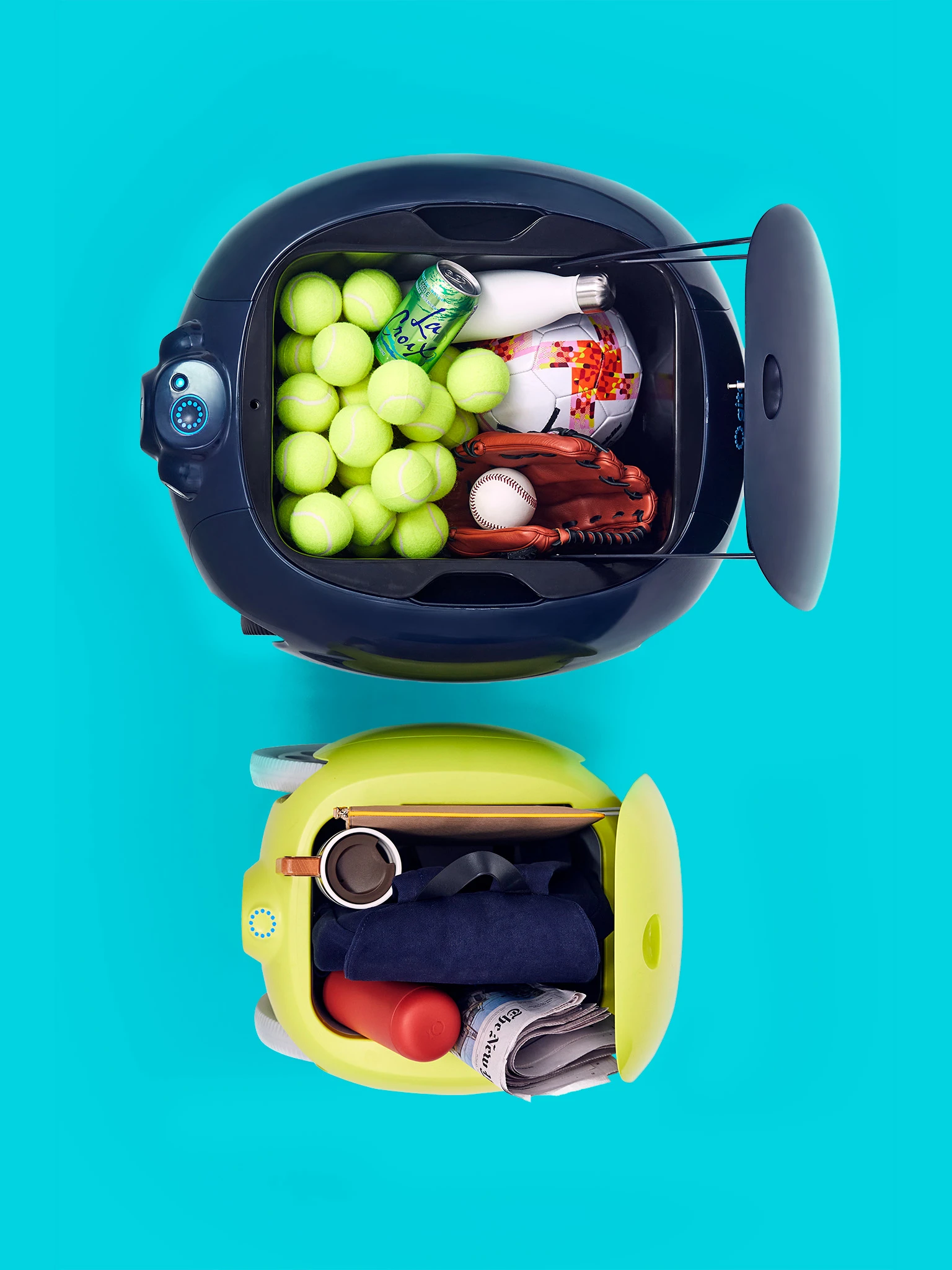
Gitamini, about the size of a medium-sized dog, has a cargo capacity of 16 liters and weighs about 13 kg. It can carry up to 9 kg of your belongings, and thanks to external handles it can easily climb curbs, stairs and other obstacles even when fully loaded.
Mini is designed for a maximum travel distance of 34 km, or about six hours of use without recharging. The company replaced the belt tracker with advanced optics and machine vision. With one press of a button on board, the mini device will independently find and recognize its "owner" and follow them, using only visual and radar signals such as color and motion. The robot does not need GPS, cellular service or a wireless network connection to do this.

Gitamini is also equipped with "pedestrian etiquette software". It teaches the robot to follow its owner at a safe distance and speed, anticipating the movements of people around them in advance. The device's wheels have independent drives, allowing it to make sharp turns, and a third motor is designed to keep the robot balanced during acceleration and braking.
“The initial consumer response to Gita showed us how much of a pioneer this product was in the consumer robotics industry. Then we asked ourselves: "How do we take what we heard from people and create something new for a new segment of consumers?". Gitamini is the company's answer. It is more maneuverable indoors and outdoors, lightweight, and packs updated technology and developments into a compact and stylish design. A perfect combination of technological progress and consumer-focused needs”
What makes Gitamini an innovative robot:
- lightness and maneuverability
- compactness
- smart vision
- intuitive technology
- comfort on long trips
- connectivity through light and sound
- cargo container
The robot's cargo compartment can be locked and its follow mode disabled, but then the active theft prevention features will not work. The CEO of Piaggio Fast Forward said it is "unlikely that anyone could get away with it unnoticed", since it is such a conspicuous object.

“A stolen Gita is of little use to anyone, since it uses a secure connection to the phone for unlocking, updates and operation. We have yet to learn of a Gita being stolen or hacked during use or while parked”
The Gita has always been considered a somewhat strange device. The robot certainly looks fantastic, and videos show it works more or less as advertised (though it is noisier than one might expect). However, it is not entirely clear who would spend thousands of dollars on a device that carries a few bags and gets lost when faced with curbs and stairs. The Gitamini will at least be less expensive: it goes on sale October 15 for $1,850. At the same time, the price of the original Gita will drop to $2,950.
The company's CEO did not share any sales data with the media, but said Gita robots are operating "in half of US states, with an emphasis on the Sun Belt, where the weather outdoors is friendlier year-round".
“Most consumer Gita trips replace car trips for local errands in various communities, and they are used for outdoor travel of 1 km or more in each direction”
Lynn also noted that the company has business customers. Currently, robots are present in eight US airports (including JFK and LAX) and several more in planned communities such as Water Street Tampa in Florida and Ontario Ranch in California.


