
FamilyMart plans to open 1,000 autonomous supermarkets in Japan by 2024
The 24-hour supermarket chain FamilyMart plans to open about 1,000 of its unstaffed stores by the end of fiscal 2024, offering the same products as its regular outlets, as part of Japan's first large-scale rollout of fully autonomous stores.
"We are a 24-hour store that calls itself a 'family.' The name FamilyMart is our origin and our ideal. FamilyMart is a network of small local stores. Each store lives with the people next door and owes its existence to them. We will work hard to become a store that has close ties and grows as an integral part of the local community," the company said.
In 2020, Japan relaxed rules requiring stores to have employees on site. The country's labor shortage will intensify as its population continues to shrink, so more businesses are turning to digital technology to streamline operations.
In labor productivity, Japan ranks lowest among the Group of Seven countries and only 21st among the 37 members of the Organisation for Economic Co-operation and Development.

Automation has become vital for retail, which lags other industries in productivity gains. However, food sanitation laws required retail stores handling food to have a sanitation supervisor on site. In June 2020, responding to repeated requests from retail industry groups, the Ministry of Health, Labour and Welfare said sanitation checks could be carried out by patrols.
Payment systems are another key element of autonomous stores. FamilyMart will use ceiling cameras with artificial intelligence, as well as weight sensors on shelves, to track which products supermarket customers pick up. When shoppers stand in front of the payment terminal, product names and prices appear on the monitor, and they pay electronically or in cash.
The system eliminates the need to scan barcodes and makes theft in stores more difficult. To protect customer privacy, data that could identify individuals, such as facial images, will not be collected. Customers will not need to prepare a smartphone app in advance or undergo biometric authentication to enter the store.
The company said the new autonomous stores can offer about 3,000 products sold in its regular supermarkets. A trial store opened in Tokyo in July 2021 measured just 50 square meters, about 30% smaller than a typical outlet. It used about 50 cameras and offered around 750 product items. Alcohol buyers' age was verified using a monitor on the payment terminal.
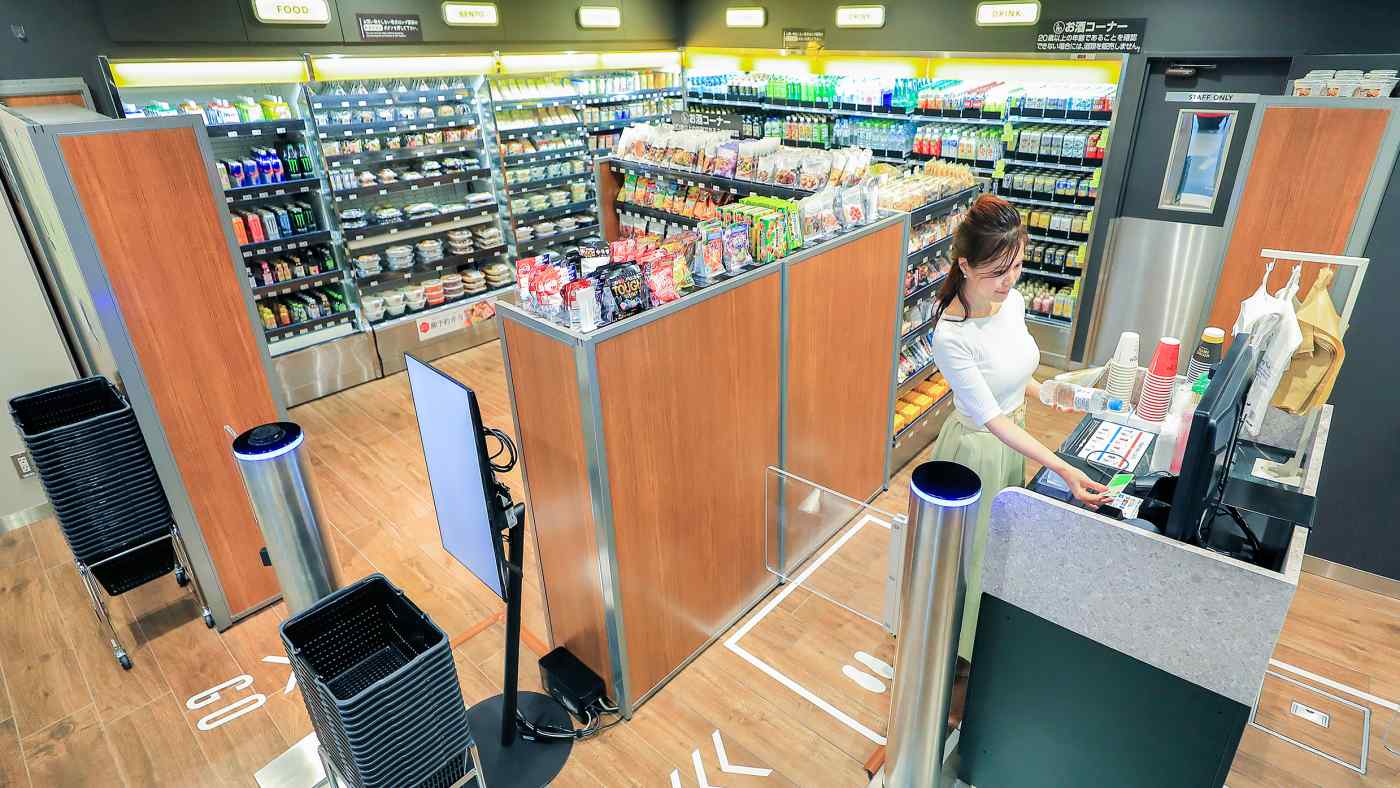
FamilyMart decided to begin large-scale expansion after confirming that the system worked smoothly with about 10 customers in a store at the same time. The system uses expertise from Touch To Go, a Tokyo company that develops technology for unstaffed stores. It is a subsidiary of East Japan Railway Company, and FamilyMart also holds a stake in it.
Opening an automated store costs about 20% more than a conventional one, but labor costs can be significantly reduced because staff are needed only to receive and stock goods. According to a study by the Japan Fair Trade Commission, 60% of franchise store operating costs go to labor.
FamilyMart operates about 16,000 stores in Japan and opens between 200 and 500 new ones each year. From now on, new stores will be operated with almost no staff.
“We will be able to open stores in areas that have until now been unprofitable. We want to contribute to solving social problems, such as helping regions that lack supermarkets”

Japan has more than 50,000 convenience stores, but this number fell for the first time in 2019. The traditional business model limits the locations where stores can open, so a new format is urgently needed. Stores also need to address rising minimum wages and a shrinking workforce.
Other retail chains are rushing to improve the efficiency of their stores. Seven-Eleven Japan, together with technology company NEC, is experimenting with autonomous stores that use facial recognition for payments.
Lawson has introduced a "smartphone cash register" that lets customers scan product barcodes with their smartphones. Kinokuniya, an upscale supermarket, opened a small grocery store just outside Mejiro Station on the busy Yamanote Line, using a system similar to FamilyMart's.
The US, China and other countries lead in autonomous stores, but they have yet to adopt this model widely. Amazon once had 26 Amazon Go stores, but as of September 2021 that number had dropped to 22. Some stores adopted biometric authentication that lets customers pay simply by raising their palms. But many consumers dislike the idea, so companies are exploring ways to share credit card and app authentication.


