
Seoul Robotics' autonomous 'control tower' remotely manages a fleet of self-driving vehicles
Despite Tesla's ambitious claims about the full self-driving capabilities of its cars, today's autonomous navigation technologies generally sit at level two. More advanced autonomous driving systems are in development, but it will likely be years before they become safe and cost-effective enough for everyday use.
Seoul Robotics, a developer of 3D perception solutions that uses artificial intelligence to enable the future of mobility, has unveiled a level five control tower (LV5 CTRL TWR). It is a mesh network of sensors and computers in the infrastructure that controls vehicles autonomously, without requiring sensors to be installed on individual vehicles.
The revolutionary technology is at an early stage of commercial deployment at BMW, where it automates last-mile fleet logistics at its production plant in Munich. Beyond OEMs, the system can transform operations across a wide range of business applications, from vehicle distribution centers to car rental companies and freight logistics.
Autonomous mobility faces several barriers to entry: it is prohibitively expensive, not yet safe enough to achieve level five autonomy, and lacks the ability to effectively perceive and anticipate obstacles. To ease these challenges, Seoul Robotics is taking a novel infrastructure-based approach to achieving autonomy.
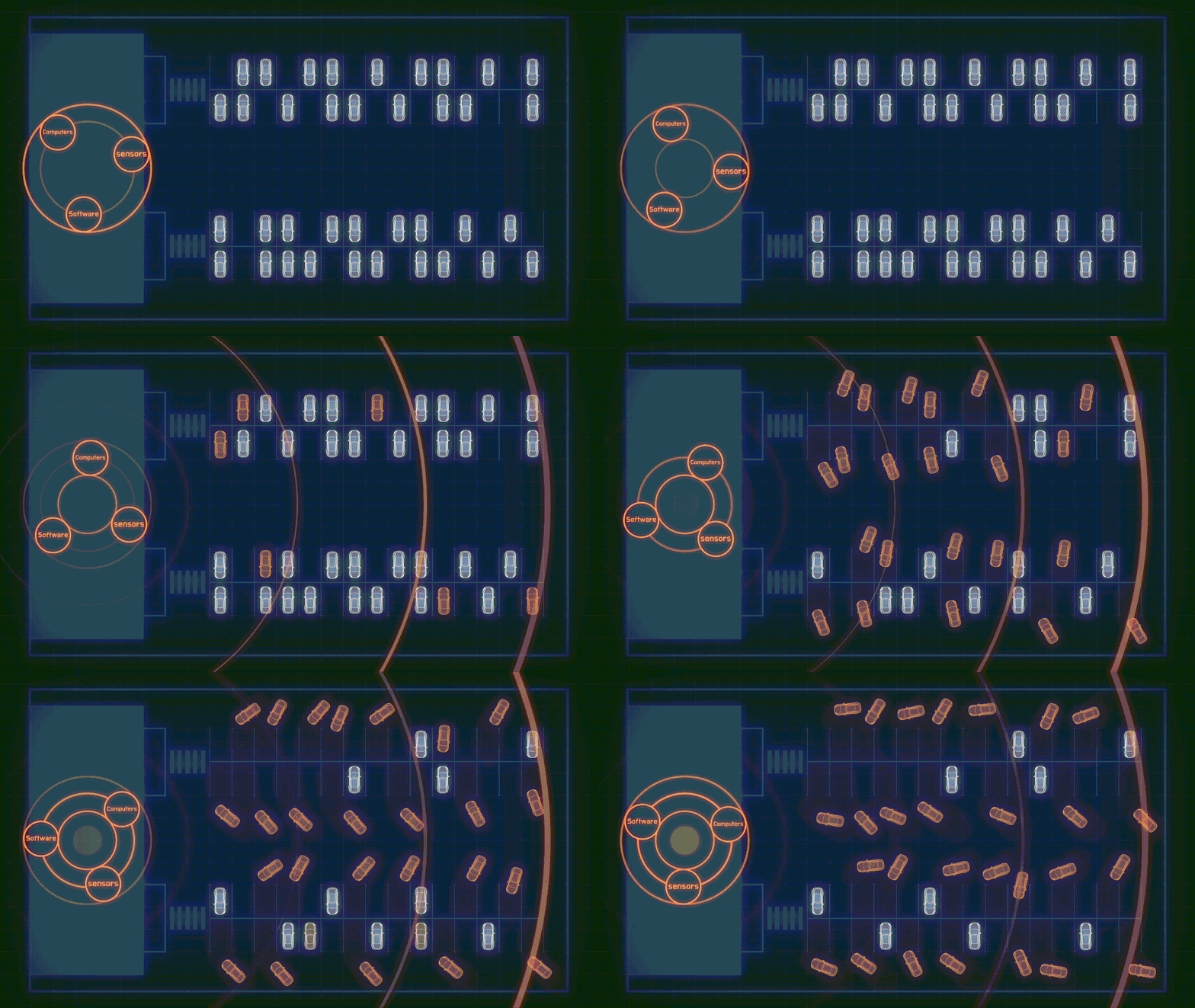
By placing sensors equipped with 3D perception software around vehicles, for example on traffic lights, buildings and highway canopies, the system can fully capture the environment and exchange data with other sensors and 4/5G systems that are now standard in vehicles. LV5 CTRL TWR is the brain of this mechanism, which collects all the 3D data and then automates vehicles accordingly using V2X communication.
“So far, reaching level five mobility has proven harder than expected. LV5 CTRL TWR has enormous potential to enable autonomous mobility, and we are excited to keep expanding the deployment of this technology with BMW and other partners. Ultimately, these systems will be rolled out at more public and commercial sites, improving aspects of our daily lives such as autonomous parking and public transport. With LV5 CTRL TWR, this future is closer and more accessible than ever”
While autonomous mobility is exciting for everyday consumers, LV5 CTRL TWR has already proven its major impact on business operations. The collaboration with BMW, the largest deployment of this type of technology to date, uses hundreds of connected LiDAR and 3D sensors in the infrastructure to automate new vehicles at factories and vehicle distribution centers without any human involvement.

By making this process autonomous, original equipment manufacturers (OEMs) such as BMW can improve the efficiency and safety of automotive logistics. LV5 CTRL TWR can automate vehicles from multiple viewpoints, such as behind a truck and around corners, and predict trajectories, thereby eliminating blind spots, which is a current challenge for onboard LiDAR systems.
This broad understanding of the environment and the activity within it reduces collisions and creates a more reliable process. In addition, the system is sophisticated enough to manage the movement of hundreds of vehicles simultaneously at no extra cost, ensuring that vehicles can move more slowly or take longer, safer routes, which can further prevent accidents.
LV5 CTRL TWR is made possible by SENSR, Seoul Robotics' industry-leading 3D perception software. SENSR is the only sensor-agnostic 3D perception platform on the market that can also use deep learning artificial intelligence for advanced tracking, detection and prediction with centimeter-level accuracy.

The system is very flexible and can combine and match different manufacturers and models of 3D sensors to ensure that LV5 CTRL TWR has the most accurate understanding of the environment.
Seoul Robotics demonstrated LV5 CTRL TWR and its full suite of 3D perception-based solutions at the Consumer Electronics Show (CES) on January 5–7, 2022.
Seoul Robotics is a company focused on 3D perception solutions, building a platform that uses AI deep learning to enable the mobility of the future. Founded in 2017, the company works with OEMs, system integrators and government agencies around the world to diversify the use of 3D data.
The company has developed and commercialized its own proprietary software, which is compatible with virtually all commercially available LiDAR and 3D data sensors, to improve accuracy and efficiency and ensure safety across a range of industries and applications. Seoul Robotics has offices in Seoul, Munich, California, Raleigh and Detroit and is backed by leading global financial institutions.


