
Nuro unveils third-generation autonomous delivery vehicle
Nuro unveiled its third-generation autonomous delivery vehicle, also called Nuro. Previous versions of the vehicle were called R1 and R2.
One of the most notable features of the new vehicle is an external front airbag that deploys when the vehicle collides with pedestrians and cyclists, designed to protect those around it.
Nuro is about 20% smaller than an average car. This leaves more room on the road for cyclists and pedestrians. Nuro's maximum operating speed is 72 km/h, which is 40 km/h higher than the R2's maximum speed.
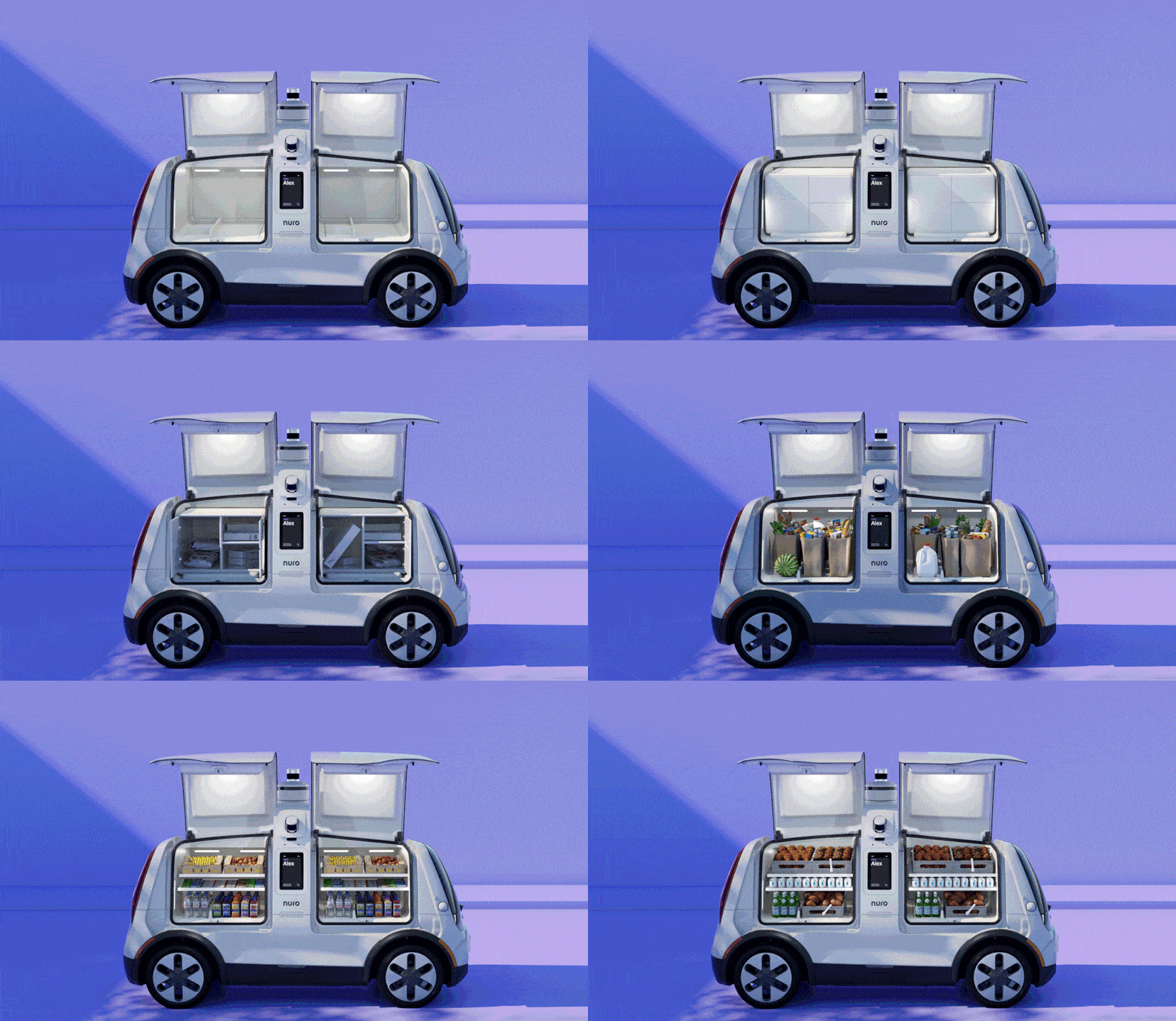
Like the R1 and R2, Nuro is a fully passengerless vehicle, but its capacity is twice that of the R2. It can carry a total of 227 kg, and its compartments can hold about 24 grocery bags. Modular inserts allow the compartments to be heated and cooled. The vehicle can store goods at temperatures from -5.5 degrees Celsius to 47 degrees Celsius.
"The new vehicle was designed to feel like a friendly member of the community and to be a pleasure to interact with. We designed the compartments so that almost anything can be stored in them, and individual orders are kept separate and secure. The large, beautiful touchscreen will let us develop new and attractive solutions for street commerce, such as mobile marketplaces," the company said.
The new model is equipped with a sophisticated set of sensors that gives the vehicle a 360-degree view of its surroundings. Nuro's sensors are self-cleaning, which ensures they keep working in various weather conditions.
The company is doubling its emissions reduction commitments. Like previous models, Nuro runs on a battery and produces no harmful emissions. However, unlike past delivery vehicles, Nuro uses 100% renewable energy from wind farms in Texas to power it. All materials meet strict supply chain standards aimed at protecting the environment.
“Five years ago we decided to create an autonomous vehicle and delivery service designed to run errands and give people back their precious time. Thanks to our strategic partnerships with Domino's, FedEx, Kroger, 7-Eleven and others, we are doing exactly that: improving road safety, sustainability and broad access to delivery of goods. With the introduction of our new flagship model and the launch of our new manufacturing facility, one of the first of its kind in America, we are excited to realize our vision of improving everyday life through autonomous delivery at scale”
In August 2021, the company announced plans to build a manufacturing facility and test track in southern Nevada. The facility is expected to employ 250 workers to scale Nuro. The company plans for the facility to be fully operational by the end of 2022.
The company is also working with Build Your Dreams (BYD) North America, a subsidiary of the Chinese electric vehicle OEM network. This partnership will help Nuro source hardware components for its vehicle platforms from global suppliers.

Nuro has not disclosed when its new model will hit the streets, but it is currently in the production preparation stage.
"We have always known that solving last-mile delivery with robotics would improve the daily lives of millions of people. Developing the right autonomous vehicle for this, and taking a zero-passenger approach to its design, was a monumental task requiring years of work and iterations based on real-world learning. We wanted to get it right. We needed to make it safe, fully electric and easy to operate," Nuro said.
Safety has always been and will always be the team's top priority. The press release notes that one of the main reasons for founding Nuro was the understanding that reducing the number of car trips would make it possible to keep more people safe.
"We uphold our safety to the highest standards. Our systems are safe to operate because they are designed to be robust from the ground up. We implement protection and detection mechanisms for early warning of potential attacks and ensure we maintain our safety margin in every conceivable scenario. Early detection in our system is constantly evaluated by our internal offensive security testing and evaluation team, which conducts penetration testing by simulating well-funded and highly skilled attacks," said the Nuro team in a statement.
The third-generation vehicle was specifically designed to become a beloved member of every community. When the company decided to change everyday life through robotics, it paid close attention to fairness: developers did not want to serve only certain neighborhoods or demographic groups; they wanted to open access to goods and services worldwide.
In 2021, the company announced partnerships with 7-Eleven, FedEx and Domino's to test its delivery vehicles. In November 2021, the company announced it had raised $600 million in funding. The company is valued at $8.6 billion.


