
Pay More, Train Less: Why Some Consider the Carol Smart Exercise Bike a Paradox
If you had the option, would you pay more to use an exercise bike less often? Oddly, that is exactly the business challenge for the home smart exercise bike Carol, which is designed for a short workout lasting 8 minutes and 40 seconds.
The company claims this is the shortest and most effective cardio, since the workouts are managed by artificial intelligence.
At the end of the standard program, the bike even tells the user they can go to the gym if they want to. The exercise bike costs $2395, plus $12 per month after three months of use. Let us take a closer look at this new smart fitness device.
Science
Carol uses the principles of high-intensity interval training (REHIIT). Simply put, you are asked to train at a very high intensity for a very short period of time, rather than for a long time at a steady state. The manufacturer promises that the standard workout, lasting less than nine minutes, replaces a session equivalent to a 45-minute run.
You are expected to give everything you have for 20 seconds, so you can then enjoy a long recovery. The 20-second frenzy is designed to deplete glycogen stores in the body and sharply raise heart rate. The long recovery time is designed to restore the body, allowing the muscles to be strained much more.
Studies have shown that, at least in male participants, a six-week REHIIT program can improve insulin resistance and oxygen consumption.
“One of the things I like about REHIIT is the long recovery period. It allows people without much experience to properly recover between bouts of hard work, and then move on to the next round”

Bicycle
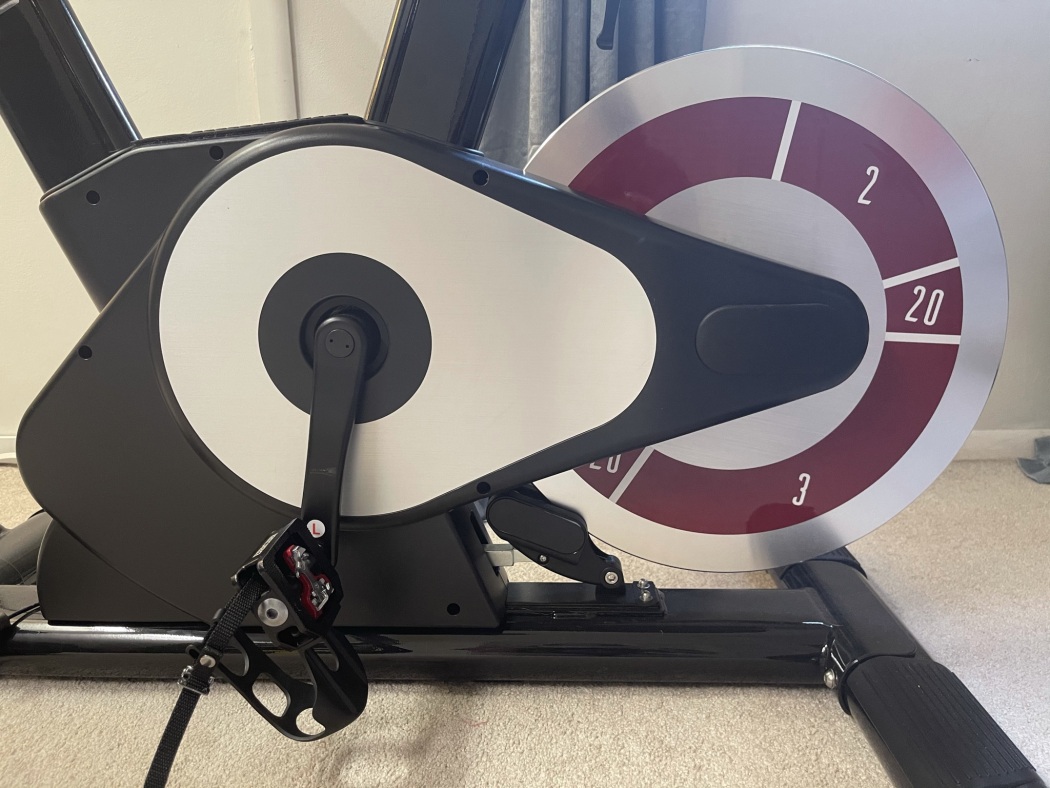
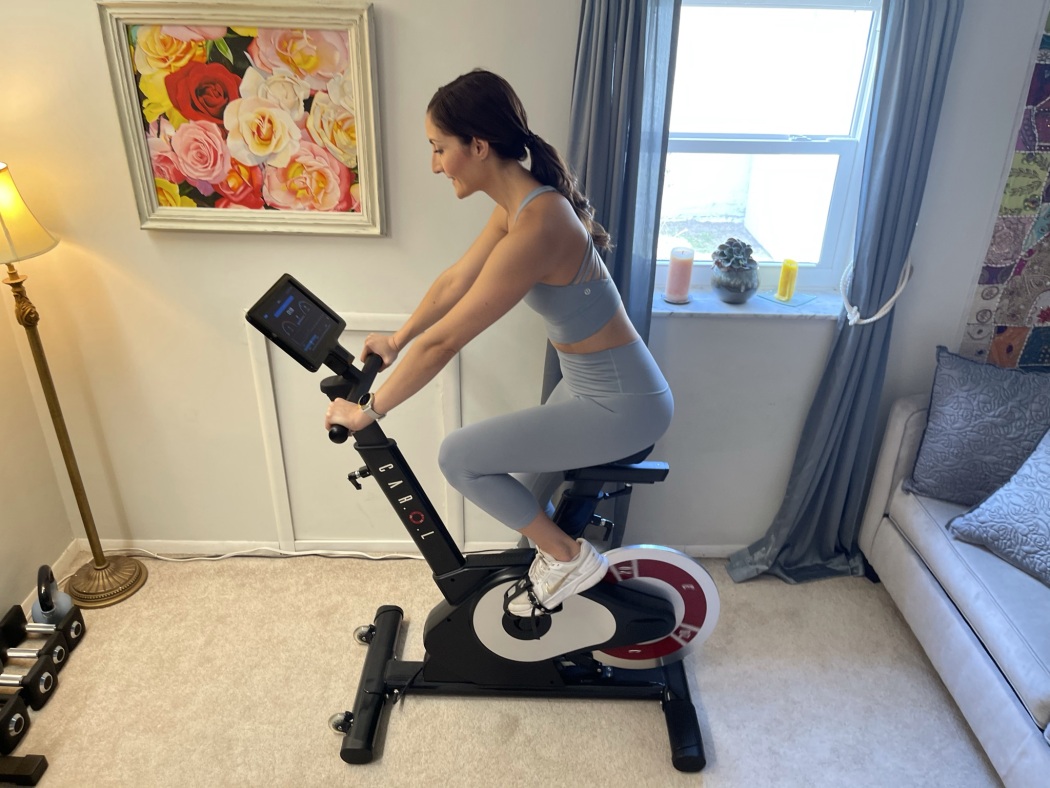
At first glance, Carol could be mistaken for almost any exercise bike. It has a large flywheel with a rear suspension and a powerful drive unit housing an electronic resistance control system. A pair of short handles with standard electrodes for heart rate monitoring sits below the display housing, which features a 10.1-inch screen.
“To reproduce laboratory protocols, the bike must be controlled by a computer and run a protocol that can instantly switch from hyperbolic mode to constant torque mode. This requires specialized software and expensive equipment. Carol has all of this, and it is the only consumer exercise bike I know of that can do it”
Seat height and reach are adjustable, as is the handlebar height, and the pedals feature toe cages and clips for professional cyclists. The powerful device is intended for both home and professional use, for example for office workers who can exercise during a break.
Display
When it comes to displays, the home fitness market is dominated by two approaches. The widespread popularity of Peloton means consumers may soon expect every device to come with a glossy, large HD display by default. However, some companies still make equipment with old-school LCD displays.
Carol offers consumers a color touchscreen. The user interface flashes red when you enter the high-intensity phase, and it also features excellent visualizations showing your power output. The equipment's display is literally a Lenovo tablet in a housing. Since it runs Android, you can launch third-party apps through the Play Store, although only those approved by the device's creators.

Usage
After answering a medical questionnaire, the user must go through six test sessions on the bike to assess their overall fitness level. Then they can try everything Carol offers, including four different REHIIT workouts. For example, the Energiser ride offers shorter 10-second sprints, as well as a 15- or 25-minute fat-burning program with 30 or 60 sprints.
After choosing a program, you can select general sound settings. A calm voiceover will tell you how Neanderthals never jogged; they either walked slowly or ran as if their lives depended on it. A short breathing exercise is also offered.
A countdown timer and a timeline are shown on the screen, and the voice does not announce when the sprints will start. Usually you are suddenly told that a "tiger is jumping on you" and you must pedal to save your life. The screen turns red three seconds before a sprint begins. Resistance is calibrated to your fitness level and keeps increasing after the initial burst of energy, to ensure you are completely exhausted by the end of the sprint.
The screen also shows a graph of your results with sprint comparisons, so the user can clearly see how much weaker they get each time. Carol repeatedly recommends doing only one sprint within 24 hours and only three times a week to avoid injuries.
The difficulty is the fact that the bike costs nearly $2400, while you will use it only 30 or 40 minutes a week. The device itself does its job well. However, it is designed for a broad audience, and right now it is being bought only by enthusiasts who do not see the gap between cost and usage time as paradoxical.


