
Stanford engineers are building robotic restaurants with a Michelin-starred chef
While studying engineering at Stanford, Alex Kolchinsky, Alex Grubele and Max Perham met and became interested in the lack of food options on campus and their high cost.
“Even with a subsidized meal plan, lunch costs $10 and dinner even more. I sat and did my work in the dining hall so I could afford two meals. Alex Grubele simply went to Chipotle (a restaurant chain) and spent his scholarship there”
Thinking about how to provide good food at a lower price, Kolchinsky and Grubele, who were working on PhDs in robotics, began to wonder how robots could help people with cooking and other tasks.
Kolchinsky said: "It turns out a $10 burrito plate actually costs $3, and the rest of the money goes to labor, overhead and real estate. If we built an autonomous restaurant, we would lower the prices of really good food, and it would be nearby."
The three friends teamed up with Michelin-starred chef Eric Minnich, who previously was part of the culinary team and executive chef at the Spanish restaurant The Commissary in San Francisco, to found Mezli, a company creating fully autonomous modular restaurants. In 2020, most of the company's plans were made public.
“Reliability is the key point when creating a fully autonomous restaurant with robots. A number of startups previously built restaurant robots that were not reliable or fully functional enough to serve customers without human help. On the other hand, full autonomy opens up much lower costs for building and running a restaurant, as well as much lower prices for customers, but maintaining a truly autonomous restaurant operating around the clock and without days off requires a level of reliability that no company has yet achieved”

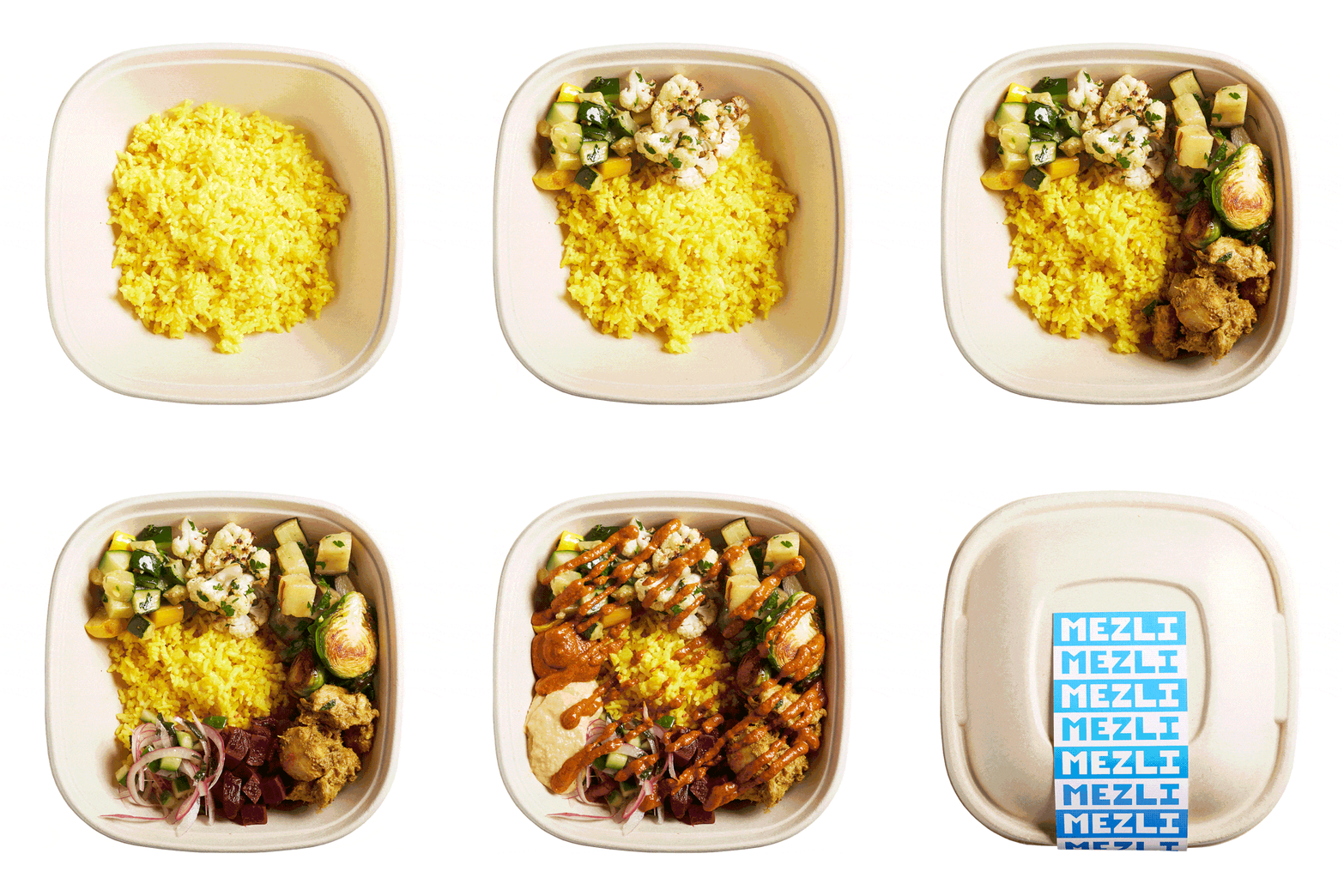
A prototype of the Mezli robotic restaurant is already operating and serving customers from the KitchenTown office in San Mateo. The units occupy a 3 by 6 meter area and stand separately from one another. They are stocked with ingredients to offer customers Mediterranean-style grain bowls, side dishes and drinks. Bowls start at $4.99.
Visitors can order right at the restaurant, order online and pick up food from a smart locker, or order delivery. According to Kolchinsky, the results of the first tests already look promising: 44% of customers who tried the food became regular visitors.
He said the company is currently working on the third version of its prototype, which will be ready for public launch in 2022. The company's ambitions are supported by a $3 million investment from Metaplanet, robotics researcher Pieter Abbeel, restaurateur Zaid Ayoub and Y Combinator (a venture fund). The new funding will allow the company to add more talented employees, parts, food and operational resources.

Once the company is able to scale, Mezli plans to 3D print thousands of modular restaurants and deploy them in far less time and for far less money than traditional restaurants in order to start operating. Kolchinsky said: "We will expand to several locations and then produce them at scale. We expect to open 1,000 locations faster than other restaurants, thanks to our mass production method."
One of Mezli's supporters, Pieter Abbeel, is a professor at the University of California, Berkeley and an entrepreneur in the founder group of Gradescope and Covariant. He heard about the company from acquaintances of some of the team's founders and would like to take part in the project.
Abbeel was drawn to the company's vision of offering more affordable and healthier food. As a scientist, he also liked the approach based on "first principles" of using business and engineering to reduce problems associated with getting food into people's hands and with how it is served.

“This resonates with me. All physical things are always harder than you think, so if you don't come up with a first-principles way to solve this problem, it will be difficult. Also, food has been served here from day one, and that is delightful”
Alex, Max and Alex are eagerly awaiting the changes their approach will bring to the food service industry. Because robotic restaurants are inexpensive, they can be deployed even in places where it is impossible to run a traditional restaurant profitably today. Mezli's approach also has environmental benefits. Since robots are much smaller than a typical restaurant, building them will emit significantly less carbon.
Restaurants throw away a significant amount of food due to errors and expiration, and Mezli will be able to reduce this amount thanks to the reliability and predictability of its robotic approach. Mezli envisions a future in which cooking is a hobby rather than a necessity, and the food service industry makes excellent healthy food affordable for everyone in America and beyond. The company's founders eagerly look forward to making this future a reality.


