
Dexterity expands robot manufacturing plans for logistics automation
After emerging from stealth mode in July 2020 with $56.2 million in funding, California-based Dexterity has raised another $140 million in equity financing. The company has already raised more than $200 million since its founding in 2017 and is now valued at $1.4 billion.
The latest funding round was led by Lightspeed Venture Partners and Kleiner Perkins. Obvious Ventures, B37 Ventures and Presidio Ventures also participated. Dexterity said the new capital will be used to support growth, as the first thousand robots will soon enter production.
Although robots have been used for picking and placing operations in factories, warehouses and order fulfillment centers for many years, the goal of matching human dexterity with robotic repeatability and precision has remained out of reach.
“Although robots form the backbone of manufacturing, they have historically lacked the ability to adapt and work in dynamic environments such as warehouses. Dexterity's intelligent robots constantly adapt to warehouse operations and perform tedious tasks, maximizing productivity and allowing people to focus on meaningful work”
Dexterity's hardware-agnostic robotic systems allow logistics customers to automate order picking tasks and can perform complex manipulation in unpredictable conditions. The robots can be used for picking, fulfillment, palletizing, depalletizing and sortation.
The devices use artificial intelligence, advanced control theory, computer vision and touch sensing to adapt quickly, which makes them safe to work alongside people. Dexterity is also designing its systems so that robots can move along rails, pack items and interact with other robots and people. For example, two robots can work together to pick trays or boxes and move them across the work area if needed.

Dexterity said its robotic systems have handled more than 50,000 product SKUs and completed more than 14 million picks for customers, including two of the four largest courier services. The items handled by the robots include deformable polyethylene bags, hot dog buns, flatbreads, cardboard boxes, bags of earthworms, and trays and boxes of food.
Dexterity's integrated approach includes software, hardware design and integration, deployment and round-the-clock support without days off, with performance guarantees for customers as they scale. Systems can be purchased under a "Capex" model with software licensing, or leased under a "Robots as a Service" model.
“Retail, consumer goods manufacturing and parcel handling customers need robots that can scale quickly to manage the constantly growing volume and variety of parcels moving through their distribution centers. Dexterity is proud to be at the forefront of deploying intelligent robotic systems in production at customers' existing facilities to rapidly transform their warehouse operations”
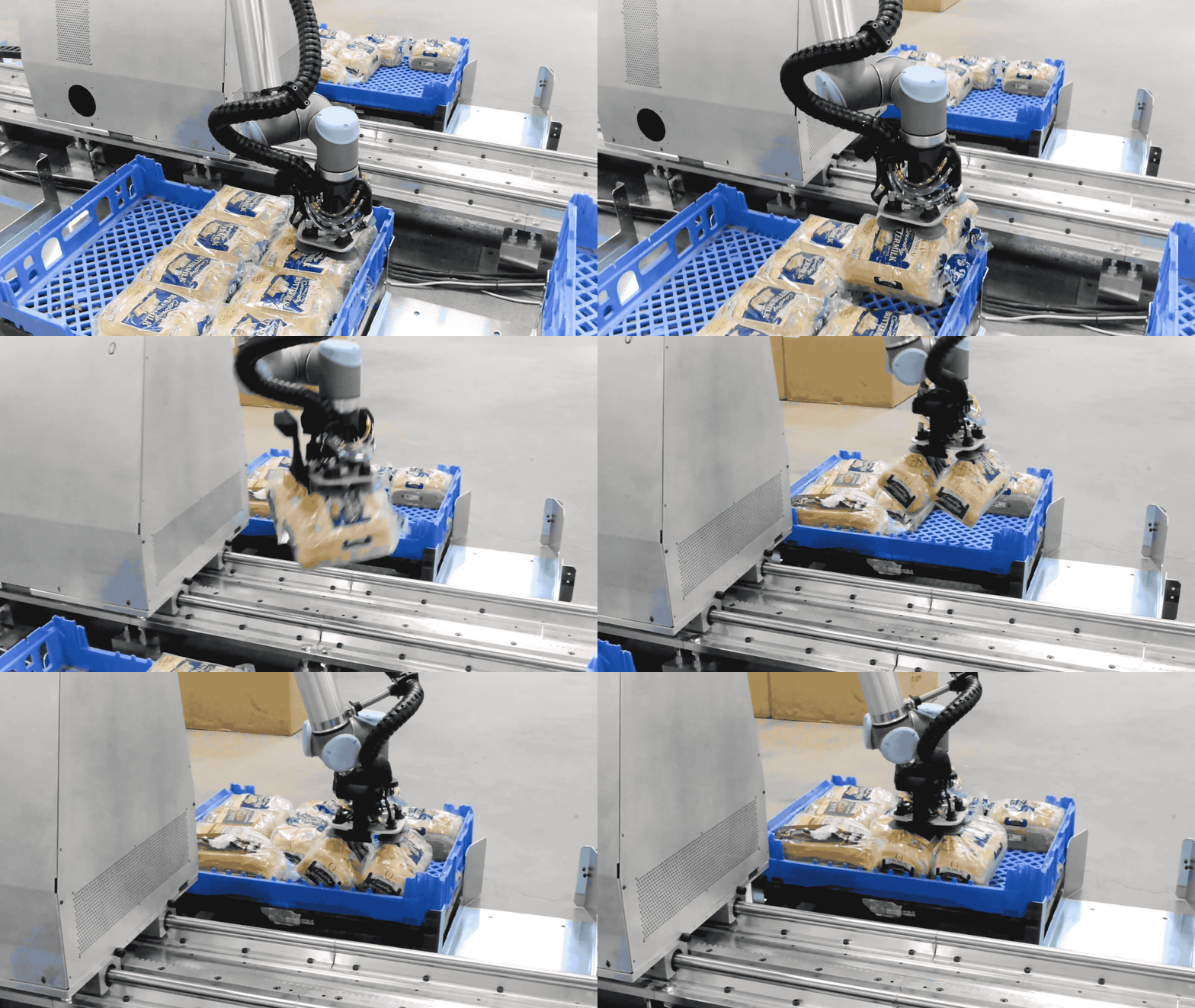
Dexterity says it can manage the entire automation process, from system design and development to deployment with operational guarantees. The company said its systems already pick more than 200 unique items in production with 99.5% accuracy, reliably handling a wide range of objects such as plastic bags, glass, perishable goods and low-profile products.
The company built its robots on a Full-Stack approach that combines both software and hardware. To support high performance and adaptability with safe human-robot interaction, the systems have useful capabilities, including force control and contextual awareness.
The platform is modular, so depending on the use case, robots can use grippers or suction cups to handle different objects. They can also track objects using 3D camera systems and identify arbitrary unknown objects using general machine learning models.

As supply chains continue to expand rapidly, driven by the growth of e-commerce, interest in dirty, dull or dangerous jobs continues to decline. Dexterity said this trend has been further intensified by the coronavirus pandemic, with rising volumes, a worsening labor shortage due to health concerns, and the inability to guarantee worker safety without seriously disrupting operations. All of this has only increased the need for automation.
The company said operators became 47% more productive with Dexterity robots, and this improvement grows over time as the robots learn and integrate more closely into local operations. The company's first customers were Kawasaki Heavy Industries, a global food manufacturer and distributor, and a global parcel delivery service provider.
“Dexterity's artificial intelligence, computer vision and design technologies are what really stood out to us. Samir (Menon, CEO of Dexterity — ed.) gives a clear picture of the future of our robotic applications and gives us confidence that through this partnership we can easily deploy our robots in various ways”


