
Swifty: Petra's Tunneling Robot for a Wide Range of Applications
Petra has emerged from stealth, announcing it has raised $30 million in funding. The round, led by DCVC, brings the robotics company's total funding to $33 million, with additional participation from ACME Capital, Congruent Ventures, 8VC, Real Ventures, Elementum Ventures and Mac Venture Capital.
“We have invented a completely new way of digging rock, and this will have serious implications for the future of tunneling. By offering a mundane solution that allows utilities to be buried underground through high-quality rock at an affordable price, we can finally protect communities from the impact of wildfires and ensure the safety of critical infrastructure in disaster-prone areas, especially in places like the Sierra Nevada, the Rocky Mountains and coastal regions”
The news follows the company's announcement of a successful pilot run of its Swifty robot. According to Petra, the robot successfully bored a six-meter tunnel through Sioux Quartzite at a speed of 2.5 cm per minute. The metamorphic rock is known for its hardness, which makes it a popular choice for construction in the upper Midwest, where it is found. However, this strength also poses a serious challenge for infrastructure and other projects requiring tunneling.
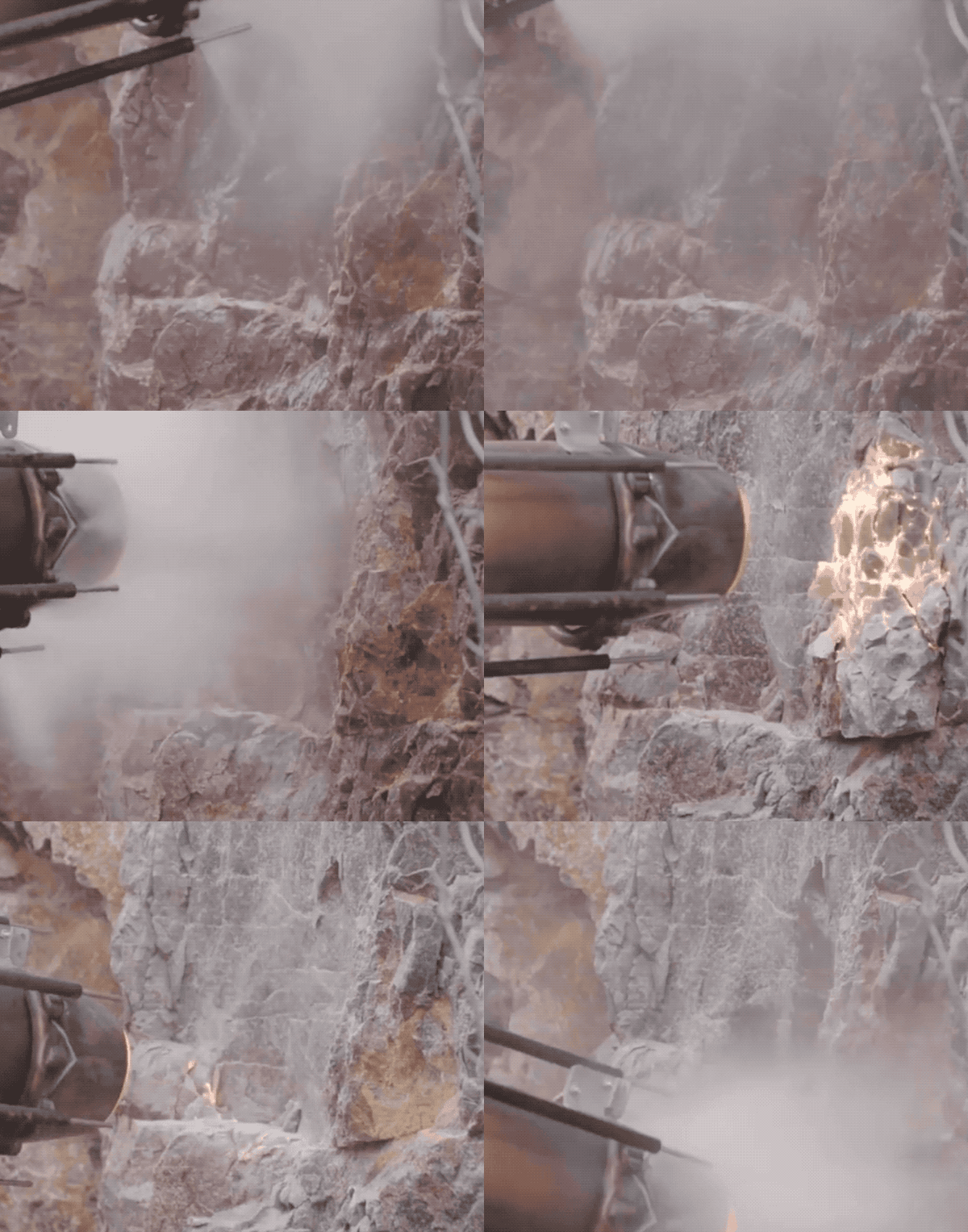
“Until now, no tunneling method has been able to bore through rocks this hard. Petra's breakthrough is based on Swifty's thermal drilling method, which efficiently breaks through rock without touching it. Drilling six meters through the incredibly hard Sioux quartzite proves our unique ability to affordably bore utility-sized tunnels through high-strength hard rock”
The robotic system uses machine vision and micro-tunneling of complex materials using thermal drilling rather than direct contact with the rock. The company said in a statement: "Swifty offers several new advantages over traditional micro-tunneling methods. Conventional micro-tunneling machines are designed to handle a single diameter. However, Swifty is the first robot capable of boring holes in a range of diameters from 0.5 m to 1.5 m, which significantly reduces the cost of tunneling."
The company cites a wide range of potential applications for this drilling technology, including construction, maintenance and tunnel creation. Petra, founded by Kim Abrams and Shivani Torres, claims to have invented a new method of drilling through hard rock that changes the way utility networks are placed underground.

“As former president of SoCal Edison, I oversaw capital projects in urban, suburban and mountainous rural areas. A robot that can bury utility lines in rock would be a game changer for us. In cities, it would allow us to bury utilities in rock beneath existing infrastructure; in mountainous areas such as the Sierra foothills, it would allow us to bury utilities in the most fire-prone regions of our state”
Petra's Swifty robot is semi-autonomous and uses a non-contact thermal drilling method that can bore micro-tunnels less than 60 inches in diameter through hard rock, meaning it is now possible to run utility tunnels through previously difficult geological conditions.
Ian Wright is one of Tesla's five co-founders, best known for developing electric cars and trucks over the past two decades. Today, however, he is applying his engineering skills to new ways of protecting the power grid from climate change and fire threats as Petra's chief technology officer.
The company aims to work with utilities and engineering companies, as the US seeks to make electric, water and sewer lines more resilient, since climate change is increasing the frequency and intensity of wildfires, floods and other severe weather events.
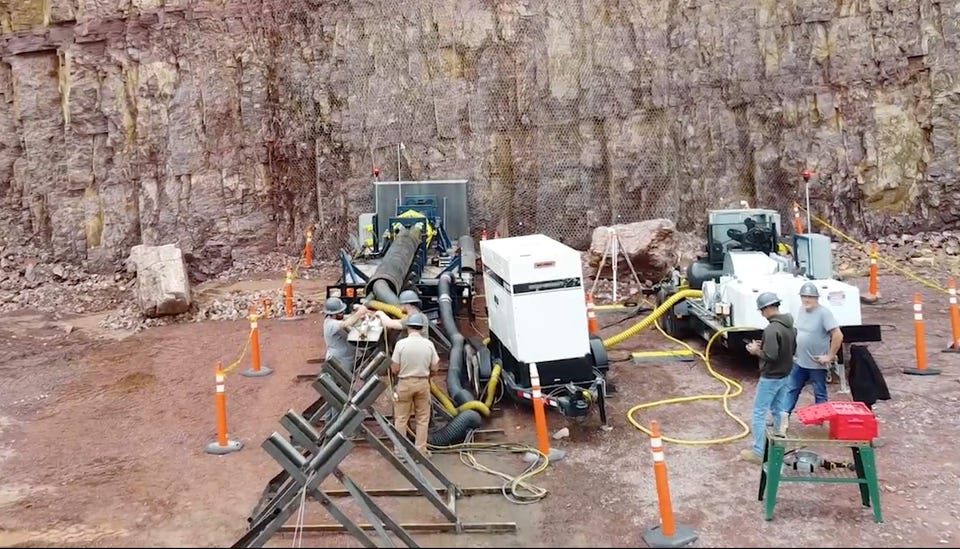
Petra's strategy may be timely, as the infrastructure law signed by US President Joe Biden in November 2021 allocates $65 billion from federal funds for energy infrastructure and $47 billion for resilience efforts.
California utilities are under particular pressure to find ways to bury power lines that have been linked to the cause of some of the most powerful recent wildfires in remote mountainous areas. At the same time, according to Petra CEO and co-founder Kim Abrams, the cost of tunneling through such complex terrain is prohibitively high, ranging from $6,000 per foot (0.3 m) to $25,000.
The company aims to cut these costs to $200 per pass through soft soil and roughly $600 per foot through hard rock, with commercial operations set to begin in late 2022. The company plans to join engineering firms on projects as a subcontractor handling complex tunneling tasks and, in some cases, may carry out its own tunneling projects and lease space to utilities wishing to run their power lines through them.


